

Have you ever been watching a great show when the screen suddenly freezes? That frustrating pause is called latency. It happens when your video can’t keep up with real time.
This delay affects everything from live sports to video calls. Modern viewers expect instant responses from their streaming applications. Nobody wants to miss the game-winning goal because of buffering.
Streaming technology has evolved dramatically. Today’s platforms must deliver content without interruptions. Your viewing experience depends on choosing the right services for your needs.
This guide will show you how to achieve seamless streaming. We’ll explore what causes delays and how to fix them. Get ready to enjoy your favorite shows without any annoying pauses.
Table of Contents
Understanding Streaming Latency: Why It Matters for Your Viewing
That moment when your screen hangs right before the big play reveals a hidden technical challenge. Streaming latency represents the invisible gap between real-time action and what appears on your display. This delay affects how you connect with live events and interactive content.
What Exactly is Video Streaming Latency?
Latency measures the time between capturing video and its appearance on your screen. Even “live” streams typically experience 20-120 second delays. This gap occurs through three main technical processes.
First, encoding converts raw video into digital format. Then transmission sends data across networks. Finally, decoding prepares it for your display. Each step adds milliseconds that accumulate into noticeable delays.
Network conditions significantly impact this process. Your internet connection, server distance, and internet congestion all contribute. Understanding these components helps you identify potential solutions.
How Latency Impacts Your Entertainment Experience
Different content types suffer uniquely from delays. Live sports become frustrating when your feed lags behind real-time action. Gaming sessions lose their competitive edge with delayed responses.
Video calls feel unnatural with conversation gaps. Educational streams miss interactive opportunities. Each scenario demonstrates why timing matters for modern viewing.
The psychological effect is equally important. Buffering breaks immersion and causes frustration. Studies show 40% of viewers abandon streams with consistent interruptions. Your engagement directly suffers from poor timing.
The Real Cost of Buffering and Delays
Beyond personal frustration, latency carries business consequences. Content creators lose audience retention during crucial moments. Streaming platforms face revenue decline from abandoned sessions.
Live events miss their impact when delayed. Interactive applications become unusable. The balance between video quality and speed becomes critical for satisfaction.
Choosing services that understand these factors ensures better performance. Your viewing needs should match technological capabilities. Recognizing latency’s importance leads to smarter streaming decisions.
Defining Low Latency: What Numbers Actually Mean
When your favorite stream starts moments after real events, you’re experiencing different latency levels. These timing differences separate ordinary viewing from exceptional experiences. Understanding these measurements helps you choose the right platform for your needs.
From Standard to Ultra-Low: The Latency Spectrum
Latency exists on a wide spectrum from broadcast delays to near-real-time performance. Traditional television often operates with 30+ seconds of delay. This high latency works for pre-recorded content but fails for interactive applications.
Modern streaming services typically deliver content within 2-18 seconds. This range represents standard over-the-top (OTT) streaming performance. Many viewers find this acceptable for movies and series.
True low latency falls between 5-15 seconds for most applications. Developers often consider 5 seconds as the benchmark for non-interactive content. This timing works well for news broadcasts and educational videos.
The most demanding applications require ultra-low latency under 1 second. Live interactive platforms need this rapid response time. Real-time latency pushes even further below 200 milliseconds.
“Latency isn’t about eliminating delay entirely—it’s about achieving the right timing for each specific use case.”
Acceptable Latency Levels for Different Content Types
Your content type determines the optimal latency range. Interactive experiences demand faster response times than passive viewing. Matching timing to content ensures the best viewer experience.
Video conferencing requires ultra-low latency under 400 milliseconds. Conversations feel natural with minimal delay. This timing prevents awkward pauses and overlapping speech.
Cloud gaming needs even faster response under 150 milliseconds. Players require instant feedback for competitive gameplay. Any delay affects performance and enjoyment.
Live sports broadcasting typically operates within 5-15 seconds. This allows for production polish while maintaining near-live excitement. Viewers accept this slight delay for enhanced presentation.
Traditional video streaming tolerates higher latency up to 30 seconds. Movies and series don’t require real-time interaction. Buffer protection often outweighs timing concerns for these content types.
| Content Type | Optimal Latency | Key Requirements |
|---|---|---|
| Video Conferencing | Natural conversation flow | |
| Cloud Gaming | Instant controller response | |
| Live Sports | 5-15 seconds | Near-real-time with production |
| Movie Streaming | 15-30 seconds | Stable buffer protection |
| Live Auctions | Real-time bidding interaction |
Technical limitations prevent true zero-latency streaming. Data transmission always requires some processing time. The goal becomes minimizing delay to match content requirements.
Choosing services with appropriate latency profiles enhances your viewing. Consider your primary content type and interaction needs. The right balance ensures satisfying streaming experiences.
How Streaming Latency Occurs: The Technical Process
Your favorite show travels through multiple technical stages before reaching your screen. Each step adds tiny delays that accumulate into noticeable latency. Understanding this journey helps you appreciate why timing matters.
The Journey of Your Video Content
Video begins its journey at the capture source. Cameras record raw footage that needs digital conversion. This initial step happens almost instantly but starts the timing chain.
Encoding transforms raw video into digital format. Specialized software compresses files for efficient transmission. This process typically adds 1-5 seconds depending on quality settings.
Transcoding adapts content for different devices and connections. It creates multiple quality versions for smooth adaptation. This crucial step ensures compatibility across various platforms.
Network transmission sends data across internet pathways. Distance between servers and your location affects travel time. Longer distances mean more potential for delays.
Buffering stores small video segments on your device. This prevents interruptions during network fluctuations. While essential for stability, it adds to overall latency.
Decoding prepares the final video for your display. Your device processes the digital information into viewable content. This final step completes the technical journey.
Key Points Where Delays Can Happen
Several critical points contribute most to streaming delays. Identifying these helps understand where improvements occur.
Encoding bottlenecks often cause initial delays. Complex compression algorithms require processing time. Higher quality settings demand more computational power.
Network transmission faces multiple challenges. Internet congestion slows data packets during peak hours. Physical distance increases travel time between servers.
Protocol selection significantly impacts timing. Different streaming methods have varying efficiency levels. Some prioritize reliability over speed.
Buffer management balances stability and delay. Larger buffers prevent interruptions but increase latency. Smaller buffers risk stuttering but improve responsiveness.
Device capabilities affect final decoding speed. Older hardware processes video more slowly. Insufficient memory causes additional processing delays.
| Process Stage | Typical Delay | Primary Factors |
|---|---|---|
| Video Encoding | 1-5 seconds | Quality settings, hardware power |
| Network Transmission | 2-8 seconds | Distance, congestion, bandwidth |
| Buffer Accumulation | 5-15 seconds | Network stability, device memory |
| Device Decoding | 0.5-2 seconds | Hardware age, processing power |
| Total Typical Latency | 8-30 seconds | Cumulative stage delays |
Content delivery networks optimize this process. They place servers closer to end users for faster transmission. Smart routing chooses the most efficient paths.
Modern solutions minimize delays at each stage. Improved codecs offer faster encoding with better compression. Edge computing processes content nearer to viewers.
Understanding these technical details helps you choose better streaming options. You can select services that optimize critical delay points. Your viewing experience improves with this knowledge.
Streaming Protocols Explained: The Technology Behind the Scenes
Behind every smooth video stream lies a hidden language that determines how quickly content reaches your screen. These technical rules, called protocols, govern how data moves between servers and your device. Your viewing experience depends heavily on which protocol your streaming service uses.
Different protocols offer varying balance between reliability and speed. Some prioritize flawless playback while others focus on minimal delay. Understanding these options helps you choose services matching your specific needs.
HLS: The Industry Standard for Adaptive Streaming
HTTP Live Streaming (HLS) dominates modern video delivery. Developed by Apple, it works across all devices and platforms. This protocol typically delivers content within 6-15 seconds.
HLS uses adaptive bitrate technology to match your connection speed. It automatically adjusts quality during network fluctuations. This prevents buffering but adds some latency.
The protocol breaks content into small segments for efficient delivery. Most streaming platforms use HLS for its reliability. It supports encryption and digital rights management features.
WebRTC: For Real-Time Interaction Needs
Web Real-Time Communication (WebRTC) enables genuine real-time video streaming. This open-source project delivers sub-500 millisecond latency. It’s perfect for applications requiring instant feedback.
WebRTC establishes direct peer-to-peer connections between devices. This eliminates intermediate servers for faster transmission. The technology works natively in modern browsers without plugins.
This protocol excels in video conferencing and live interactions. It maintains quality even with limited bandwidth. However, it consumes more data than traditional streaming methods.
SRT: Secure and Reliable Transport
Secure Reliable Transport (SRT) offers excellent performance over unstable networks. This open-source protocol maintains 1-2 second latency in most conditions. It features strong error correction and encryption capabilities.
SRT dynamically adjusts to changing network conditions. It preserves video quality during internet congestion. The protocol works well for long-distance streaming across unpredictable connections.
Many broadcasters use SRT for remote production and contribution feeds. It provides security without significant speed compromises. The technology continues gaining popularity for professional applications.
Additional Protocol Options
MPEG-DASH offers similar performance to HLS with standardization benefits. It provides 6-15 second latency with adaptive bitrate streaming. This international standard works across diverse devices and platforms.
RTMP maintains relevance despite lacking native browser support. It delivers 1-5 second latency for reliable streaming. Many platforms use RTMP for ingestion before converting to other protocols.
Choosing the Right Protocol for Your Needs
Your content type determines the ideal protocol selection. Consider these factors when evaluating options:
- Latency requirements – Real-time interaction needs faster protocols
- Audience size – Large-scale broadcasts benefit from adaptive protocols
- Network conditions – Unstable connections need robust error correction
- Security needs – Sensitive content requires encryption capabilities
- Device compatibility – Ensure support across your viewers’ devices
Most modern services implement multiple protocols for different scenarios. They might use WebRTC for interactive features and HLS for main content delivery. This hybrid approach balances performance with reliability.
| Protocol | Typical Latency | Best Use Cases | Key Advantages |
|---|---|---|---|
| HLS | 6-15 seconds | VOD, live events | Universal support, reliability |
| WebRTC | Video calls, gaming | Real-time interaction | |
| SRT | 1-2 seconds | Remote production | Network resilience |
| MPEG-DASH | 6-15 seconds | Multi-device streaming | International standard |
| RTMP | 1-5 seconds | Stream ingestion | Proven reliability |
Emerging protocol improvements continue reducing latency while maintaining quality. New codecs and transmission methods enhance existing technologies. The future promises even better performance across all protocol types.
Testing different options helps identify the best fit for your specific situation. Many services offer trial periods for evaluation. Your perfect streaming setup depends on matching technology to your actual viewing habits.
Evaluating Lag-Free Entertainment Service Options
Your streaming quality depends on measurable performance factors you can evaluate. These metrics help you compare different platforms effectively. Understanding what to measure ensures you choose the best option for your specific needs.
Key Performance Metrics to Consider
Several critical measurements determine streaming service quality. Each metric affects your viewing experience differently. You should consider all these factors when comparing options.
Startup time measures how quickly your video begins playing. This initial delay impacts viewer satisfaction immediately. Faster startup times create better first impressions.
Buffering rates show how often playback interrupts. Lower rates mean smoother viewing. Consistent buffering indicates network or server issues.
Quality consistency tracks resolution stability during playback. Good services maintain steady video quality. Fluctuating resolution suggests technical problems.
These metrics work together to create your overall experience. You should evaluate them under normal viewing conditions. Real-world testing provides the most accurate results.
Latency Benchmarks for Quality Comparison
Latency measurements vary by content type and application needs. Different uses require specific timing standards. Understanding these benchmarks helps you set realistic expectations.
Interactive applications need the fastest response times. Video conferencing requires under 500 milliseconds latency. This ensures natural conversation flow without awkward pauses.
Live events typically operate within 5-10 seconds delay. This allows for production enhancements while maintaining excitement. Sports and news broadcasts fit this category well.
Pre-recorded content tolerates higher latency up to 30 seconds. Movies and series prioritize buffer protection over speed. These differences highlight why content type matters.
Use these testing methods for accurate comparisons:
- Measure latency during peak viewing hours
- Test across different network conditions
- Compare multiple content types on each service
- Use network monitoring tools for precise measurements
Consider these additional factors during evaluation:
| Factor | Importance | Testing Method |
|---|---|---|
| Protocol Support | High | Check technical specifications |
| CDN Performance | High | Geographic latency tests |
| Encoder Compatibility | Medium | Format support verification |
| Error Recovery | High | Network disruption simulation |
Your testing should match your actual usage patterns. Consider your typical content types and viewing times. The right service balances all these performance aspects for your specific situation.
Many platforms offer free trials for evaluation. Use this opportunity to test under real conditions. Your perfect streaming solution depends on matching technical capabilities to your viewing habits.
Top Streaming Platforms for Gaming Content
Gaming streams demand instant interaction between players and viewers. Your audience expects real-time reactions to their comments and gameplay moments. Choosing the right platform makes all the difference for your gaming content.
The best gaming streaming services combine low latency with robust community features. They understand that every second counts when sharing gameplay excitement. Your streaming experience should feel seamless and engaging.
Twitch: The Gamer’s Choice
Twitch dominates the gaming streaming world with its massive community and specialized features. This platform averages just 5 seconds of latency during normal broadcasts. That near-real-time performance keeps your viewers connected to the action.
The service offers extensive tools for audience interaction. Built-in chat features allow instant communication with your community. Channel points and custom emotes create unique engagement opportunities.
Twitch provides excellent monetization options for dedicated streamers. Subscriptions, bits, and advertisements generate revenue from your content. Partner and affiliate programs help you build a sustainable streaming career.
Gaming-specific features include squad streaming and watch parties. These tools enhance collaborative broadcasting experiences. The platform continuously updates its gaming-focused capabilities.
OBS: Open Source Flexibility
OBS Studio delivers unparalleled customization for your gaming streams. This free, open-source software gives you complete control over your broadcast setup. Normal operation maintains around 5 seconds of latency.
The low latency mode reduces delay to just 1-2 seconds when enabled. This feature is perfect for interactive gaming sessions. You maintain real-time connection with your audience during crucial moments.
Advanced users appreciate OBS’s extensive plugin ecosystem. Custom scripts and add-ons enhance your streaming capabilities. Scene transitions and source management provide professional-level production quality.
OBS integrates seamlessly with all major streaming platforms. You can broadcast to multiple services simultaneously. This flexibility makes it ideal for cross-platform content distribution.
| Platform | Latency Performance | Best For | Community Features |
|---|---|---|---|
| Twitch | 5 seconds average | Dedicated gaming communities | Integrated chat, channel points, subscriptions |
| OBS Studio | 1-5 seconds (with low latency mode) | Custom streaming setups | Multi-platform integration, plugin support |
Choosing between these options depends on your specific needs. Twitch offers built-in audience building tools and monetization. OBS provides technical flexibility and control over your streaming experience.
Many successful streamers use OBS to broadcast to Twitch. This combination leverages both platforms’ strengths. You get technical customization with community engagement features.
Consider your technical comfort level and growth goals. Twitch simplifies the streaming process with its integrated platform. OBS requires more setup but offers greater creative control.
Both solutions deliver excellent performance for gaming content. Your choice should match your streaming style and audience expectations. The right platform enhances your gaming streaming experience.
Professional Collaboration Streaming Solutions
Professional teams need real-time collaboration tools that keep pace with creative workflows. These specialized streaming services offer more than basic video calls. They provide the seamless interaction that creative professionals demand.
Modern remote collaboration requires exceptional performance. Your team needs to work together as if they’re in the same room. The right platform makes this possible across distances.
Evercast: Creative Team Collaboration
Evercast stands as the premium solution for professional creative teams. This service delivers stunning 150ms latency performance. That near-instant response time feels like working together physically.
The platform streams workspace applications in crystal-clear 4K resolution. You see every detail during live editing sessions. Integrated video chat keeps communication flowing naturally.
Evercast replicates the in-person editing room experience remotely. Creative directors can provide real-time feedback during production. Teams collaborate on projects without geographical limitations.
Security features meet enterprise requirements for sensitive projects. The service includes robust encryption and access controls. Your creative work remains protected throughout the collaboration process.
Zoom: Reliable Video Conferencing
Zoom dominates the video conferencing space with its incredible 10ms latency. This performance makes conversations feel natural and immediate. The free tier provides excellent value for basic meeting needs.
The platform excels at standard business meetings and presentations. Screen sharing works well for most applications. However, CPU limitations can affect high-quality streaming performance.
Zoom integrates with numerous business applications and calendars. Scheduling and joining meetings becomes effortless. The technology supports large participant numbers reliably.
“Professional streaming solutions must balance performance with accessibility—the best tools feel invisible during use.”
These services serve different professional needs effectively. Understanding their strengths helps you choose the right tool.
| Feature | Evercast | Zoom |
|---|---|---|
| Latency Performance | 150ms | 10ms |
| Video Quality | 4K Ultra HD | 1080p HD |
| Primary Use Case | Creative collaboration | Video conferencing |
| Screen Sharing | Workspace applications | General desktop |
| Monthly Cost | $549 | Free (basic) |
| Enterprise Features | Advanced security | Business integration |
Implementation requires considering your team’s specific workflow needs. Evercast suits creative agencies and production studios. Zoom works better for general business communication.
Pricing reflects the different target audiences and capabilities. Evercast’s premium cost justifies its specialized features. Zoom offers scalable pricing for growing organizations.
Both platforms provide cloud-based accessibility from anywhere. Your team can collaborate across different locations seamlessly. The technology supports modern distributed work models effectively.
Consider your primary use cases before choosing a solution. Creative projects benefit from Evercast’s specialized capabilities. General meetings perform excellently on Zoom’s platform.
Testing both services helps determine the best fit. Many providers offer trial periods for evaluation. Your perfect collaboration setup depends on matching features to your actual workflow needs.
Enterprise-Level Broadcasting Platforms
Large organizations require broadcasting solutions that deliver both performance and reliability. These enterprise platforms handle massive viewer numbers while maintaining quality. Your business needs determine which solution fits best.

Enterprise streaming services offer specialized features for professional use. They provide advanced security and customization options. These platforms support complex workflows and large-scale deployments.
Wowza: Industry-Standard Reliability
Wowza stands as the trusted choice for major corporations worldwide. This platform delivers consistent 1-2 second latency performance. Companies like Facebook and Sony rely on its stability.
The service costs $125 monthly for enterprise access. It handles massive viewer loads without quality degradation. Wowza integrates seamlessly with existing business systems.
Advanced API capabilities allow custom workflow development. The platform supports various streaming protocols and codecs. Your technical team can tailor solutions to specific needs.
Limelight RTS: Sub-Second Performance
Limelight RTS specializes in ultra-low latency broadcasting. This technology achieves remarkable 500ms response times. It’s perfect for real-time interactive applications.
The platform excels in financial trading and live auctions. Its sub-second performance enables instant decision-making. Enterprise users benefit from its reliable network infrastructure.
Custom pricing reflects specific deployment requirements. The service scales to handle peak traffic demands. Your organization gains competitive advantage through speed.
Vonage Video API: Enterprise-Grade Features
Vonage Video API offers comprehensive streaming solutions starting at $9.99 monthly. It delivers under 1 second latency for real-time applications. The platform meets strict compliance requirements.
HIPAA and GDPR certification make it ideal for regulated industries. Advanced encryption protects sensitive communications. Your organization maintains compliance while streaming.
Robust developer tools enable custom application building. The API supports various programming languages and frameworks. Your team can create tailored streaming experiences.
“Enterprise streaming solutions must balance performance with security—the best platforms excel at both simultaneously.”
These platforms offer different deployment options to suit various needs. Cloud-based solutions provide flexibility and quick setup. On-premise installations offer maximum control and security.
Hybrid approaches combine both deployment methods. Your organization can choose the optimal configuration. The right setup depends on your specific requirements.
| Platform | Latency | Monthly Cost | Key Enterprise Features |
|---|---|---|---|
| Wowza | 1-2 seconds | $125 | Industry integration, scalability |
| Limelight RTS | 500ms | Custom pricing | Sub-second performance, reliability |
| Vonage Video API | $9.99+ | Compliance certifications, security |
Implementation planning requires careful consideration of several factors. Assess your current infrastructure and technical capabilities. Determine your expected viewer numbers and growth projections.
Evaluate security requirements and compliance needs. Consider integration with existing business systems. These factors guide your platform selection process.
Testing different solutions helps identify the best fit. Many providers offer proof-of-concept trials. Your perfect enterprise streaming platform matches both technical and business requirements.
News and Sports Broadcasting Specialists
Live sports and breaking news demand immediate delivery to your audience. These real-time events require specialized streaming solutions that traditional platforms cannot provide. Your choice of technology directly impacts how viewers experience crucial moments.
Specialized platforms offer the performance needed for time-sensitive content. They understand that delays can ruin the excitement of live sports. News broadcasts lose their impact when behind real-time events.
Red 5 Pro: Low Latency for Live Events
Red 5 Pro delivers exceptional 500ms latency for news and sports broadcasting. This remarkable speed keeps your content nearly synchronized with real-time action. Viewers experience events as they happen without frustrating delays.
The platform costs $29.99 monthly for professional access. It offers extensive server-side customization capabilities. Your technical team can tailor the streaming experience to specific needs.
Red 5 Pro excels at medium-scale live events and regional broadcasts. It handles sudden viewer spikes during breaking news situations. The technology maintains stability during critical moments.
“Red 5 Pro’s architecture ensures sub-second delivery even during peak traffic periods, making it ideal for time-sensitive broadcasts where every millisecond counts.”
Millicast: Large-Scale Event Streaming
Millicast specializes in massive audience streaming for major events. It also achieves 500ms latency while supporting enormous viewer numbers. This platform handles global sports events and breaking news coverage.
At $495 monthly, Millicast targets enterprise-level broadcasting needs. It focuses on reliability during high-profile events. The technology ensures consistent performance under extreme loads.
Millicast’s infrastructure supports worldwide geographic distribution. It maintains quality across different regions and network conditions. Your global audience receives uniform streaming experiences.
Both platforms integrate seamlessly with professional broadcast equipment. They support standard production workflows and encoding systems. Your existing setup can transition smoothly to these solutions.
| Platform | Latency | Monthly Cost | Audience Scale | Best For |
|---|---|---|---|---|
| Red 5 Pro | 500ms | $29.99 | Medium-scale | Regional sports, breaking news |
| Millicast | 500ms | $495 | Large-scale | Global events, major broadcasts |
Major sports networks use Millicast for championship events. News organizations rely on Red 5 Pro for emergency broadcasts. These real-world applications demonstrate their reliability.
Choose Red 5 Pro for regional coverage and moderate audience sizes. Select Millicast for global events and massive viewer numbers. Both platforms deliver the low latency that live content requires.
Consider your typical audience size and geographic distribution. Evaluate your technical requirements and budget constraints. The right platform matches your specific broadcasting needs.
Testing both services helps determine the best fit for your organization. Many providers offer demonstration periods for evaluation. Your perfect solution depends on your actual event requirements.
Content Delivery Networks: The Backbone of Streaming
Your streaming experience depends on invisible networks that deliver content worldwide. These systems form the foundation of modern video distribution. They ensure your content reaches viewers quickly and reliably.
Content Delivery Networks (CDNs) revolutionized how we access digital media. They solve the distance problem between content sources and end users. Your videos load faster thanks to their global infrastructure.
How CDNs Reduce Your Streaming Latency
CDNs minimize delays by bringing content closer to your audience. Traditional hosting serves all users from a single location. This creates longer travel times for distant viewers.
These networks use geographically distributed servers called Points of Presence (PoPs). Your content gets cached at multiple locations worldwide. Viewers connect to the nearest available server.
This architecture significantly reduces network hops and travel distance. Data travels shorter physical paths to reach its destination. The result is dramatically improved loading times and responsiveness.
Key latency reduction mechanisms include:
- Geographic distribution – Servers placed near population centers
- Caching technology – Storing content at edge locations
- Load balancing – Distributing traffic across multiple servers
- Route optimization – Selecting the fastest network paths
Modern CDNs employ advanced protocols for even better performance. WebSocket connections maintain persistent communication channels. This eliminates repeated connection establishment delays.
CacheFly: Ultra-Low Latency Global Network
CacheFly stands out as a premier solution for demanding streaming needs. This specialized CDN delivers exceptional 500ms latency performance. It’s designed for applications where every millisecond counts.
The service operates 75+ Points of Presence across six continents. This extensive coverage ensures global reach with local performance. Your content becomes accessible anywhere with minimal delay.
CacheFly utilizes WebSocket-based technology for real-time communication. This approach maintains persistent connections between servers and clients. It eliminates the overhead of repeated handshakes.
The platform features an advanced HTML5 player with adaptive bitrate streaming. This technology automatically adjusts video quality based on network conditions. Your viewers enjoy smooth playback even during connection fluctuations.
“CacheFly’s architecture represents the gold standard in content delivery, combining global reach with sub-second performance that meets the most demanding streaming requirements.”
Automatic HLS failover ensures uninterrupted streaming during technical issues. The system seamlessly switches between backup sources without viewer interruption. This reliability is crucial for professional broadcasting.
Integration capabilities support various streaming platforms and protocols. CacheFly works with HLS, DASH, and other popular standards. Your existing setup can leverage its advanced features easily.
Performance benchmarks show consistent sub-second delivery worldwide. The network maintains 99.99% uptime for mission-critical applications. These metrics make it suitable for enterprise-level deployments.
| Feature | Specification | Benefit |
|---|---|---|
| Global PoPs | 75+ locations | Worldwide coverage with local performance |
| Latency Performance | 500ms | Near-real-time delivery |
| Monthly Cost | $595 | Enterprise-grade pricing |
| Technology | WebSocket-based | Persistent low-latency connections |
| Video Support | Adaptive bitrate streaming | Automatic quality adjustment |
Choosing the right CDN requires careful evaluation of your specific needs. Consider your audience geography and content type. Assess your technical requirements and performance expectations.
Implementation strategies should include thorough testing before full deployment. Monitor performance across different regions and network conditions. The right CDN solution significantly enhances your streaming quality.
Budget Considerations for Quality Streaming
Your streaming budget directly impacts the quality and features you can access. Choosing the right plan requires understanding what each price point delivers. The cost spectrum ranges from completely free to enterprise-level investments.
Free plans often come with significant limitations. They typically include watermarks, reduced video quality, and limited streaming time. These restrictions can affect your professional image and viewer experience.
Paid options start around $9.99 per month for basic features. Mid-tier plans range from $20-$100 monthly. They offer better encoding, analytics, and customization options.
Free vs. Paid Service Comparisons
Free streaming services work for casual users testing the waters. They provide basic functionality without financial commitment. However, they lack advanced features needed for professional results.
Paid platforms deliver superior performance and reliability. They offer higher resolution streaming and better customer support. Your content looks more professional with paid services.
Hidden costs of free services include branding limitations. Many free platforms display their logos on your content. This can distract from your message and reduce brand impact.
Consider these limitations when choosing free options:
- Reduced maximum stream duration
- Limited viewer capacity
- Basic analytics only
- Restricted monetization options
- Lower priority technical support
Understanding Pricing Tiers and Features
Streaming services structure their pricing around feature packages. Each tier unlocks additional capabilities and resources. Understanding these differences helps you select the right level.
Basic plans typically include core streaming functionality. They support standard resolution and moderate viewer numbers. These work well for small audiences and simple broadcasts.
Professional tiers add advanced features like multi-camera support. They offer better analytics and customization options. These plans suit growing channels and businesses.
Enterprise solutions start around $138 monthly and can exceed $595. They include white-label streaming, API access, and dedicated support. Large organizations benefit from these comprehensive packages.
“The right streaming investment balances your current needs with future growth potential—choose a platform that scales with your success.”
Additional costs beyond base pricing include encoding services. Storage fees apply for video-on-demand content. Bandwidth charges can accumulate with large audiences.
Monthly versus annual pricing offers different benefits. Annual plans typically provide 10-20% savings. Monthly options offer flexibility for changing needs.
| Service Level | Monthly Cost Range | Key Features | Best For |
|---|---|---|---|
| Free Tier | $0 | Basic streaming, watermarks | Testing, personal use |
| Professional | $20-$100 | HD streaming, analytics | Growing channels, businesses |
| Enterprise | $138-$595+ | White-label, API access, support | Large organizations, broadcasters |
Budgeting strategies should account for audience growth. Start with features you need immediately. Plan for upgrades as your viewership expands.
ROI considerations include time savings and professional results. Quality streaming technology enhances viewer engagement. This can lead to better monetization opportunities.
Negotiation tips for enterprise agreements include multi-year commitments. Ask about custom feature development. Request detailed service level agreements for performance guarantees.
Your perfect streaming solution matches your budget to your goals. Consider both immediate needs and future expansion. The right investment delivers quality results without overspending.
Technical Requirements and Setup Considerations
Your streaming setup forms the foundation of your entire broadcast quality. Getting the right equipment and configuration makes all the difference between amateur and professional results. Proper planning ensures your content reaches viewers exactly as intended.
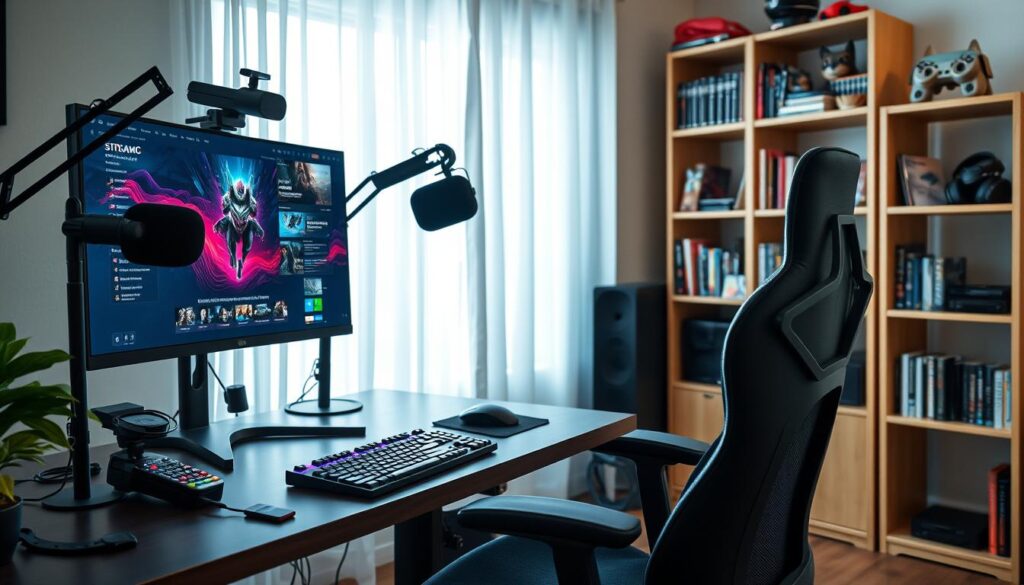
Hardware and Bandwidth Needs
Basic streaming starts with a consumer-grade laptop featuring an i5 processor and 8GB RAM. This configuration handles standard definition streaming comfortably. More demanding applications require additional resources.
Processor power directly affects your encoding capabilities. Multi-core CPUs handle video compression more efficiently. Dedicated graphics cards accelerate encoding processes significantly.
Memory requirements increase with higher quality streams. 16GB RAM supports 1080p streaming smoothly. Professional setups often utilize 32GB or more for 4K content.
Bandwidth demands vary by resolution and bitrate. Standard definition needs 3-5 Mbps upload speed. High definition requires 5-10 Mbps for optimal performance.
Ultra HD streaming demands 15-25 Mbps upload bandwidth. Always test your actual upload speed before streaming. Network congestion can reduce available bandwidth during peak hours.
| Stream Quality | Minimum Upload Speed | Recommended RAM | Processor Requirements |
|---|---|---|---|
| 720p SD | 3-5 Mbps | 8GB | Intel i5 / Ryzen 5 |
| 1080p HD | 5-10 Mbps | 16GB | Intel i7 / Ryzen 7 |
| 4K UHD | 15-25 Mbps | 32GB | Intel i9 / Ryzen 9 |
Encoder Options and Recommendations
Software encoders like OBS Studio work with most platforms effectively. These solutions offer flexibility and cost-effectiveness for beginners. They utilize your computer’s processing power for encoding tasks.
Hardware encoders provide dedicated processing for professional results. Devices like the Elgato Cam Link handle encoding independently. This reduces strain on your main computer system.
External capture cards offer another encoding alternative. They process video signals before reaching your computer. This setup improves stability during extended broadcasts.
Consider these factors when choosing encoding solutions:
- Budget constraints – Software options are most affordable
- Technical expertise – Hardware encoders simplify setup
- Stream quality goals – Professional results need better equipment
- Multi-platform needs – Some encoders support simultaneous streaming
Network infrastructure requires careful planning for stable performance. Wired connections always outperform wireless for streaming. Ethernet cables provide consistent bandwidth without interference.
Backup internet connections prevent broadcast interruptions. Mobile hotspots can serve as emergency backups. Professional setups often use dual internet service providers.
Monitoring tools help identify potential issues before they affect your stream. Network analyzers detect bandwidth fluctuations. System monitors track computer performance during broadcasts.
“The right technical setup transforms your streaming from frustrating to flawless—investing in proper equipment pays dividends in viewer satisfaction and content quality.”
Testing your complete setup before important streams is crucial. Conduct full dress rehearsals under realistic conditions. Identify and resolve any technical issues beforehand.
Optimization techniques can improve existing hardware performance. Closing unnecessary applications frees up system resources. Network prioritization ensures streaming gets bandwidth priority.
Your specific needs determine the ideal technical configuration. Consider your content type and audience expectations. The right setup delivers professional results consistently.
Security Features in Modern Streaming Services
Your streaming content’s protection depends on robust security measures that work behind the scenes. Modern platforms implement multiple security layers to safeguard your valuable transmissions. These features ensure that only authorized viewers access your content while preventing unauthorized interception.
Encryption and Data Protection
Streaming services use advanced encryption to protect your video content during transmission. SSL/TLS encryption secures data in transit between servers and viewers. This technology prevents third parties from intercepting your streams.
Data at rest receives equal protection through storage encryption. Video files remain encrypted on servers until authorized access. This dual-layer approach ensures comprehensive security.
DDoS protection mechanisms defend against malicious attacks targeting your streams. These systems detect and mitigate traffic floods before they disrupt service. Web Application Firewalls (WAF) add another security layer against application-level attacks.
Essential security features include:
- End-to-end encryption for complete transmission security
- Token-based authentication for controlled access
- Digital rights management for content protection
- Secure key exchange protocols for encryption management
Compliance Standards for Different Industries
Various industries face specific regulatory requirements for streaming content. Healthcare organizations must comply with HIPAA standards when transmitting patient information. These regulations mandate strict access controls and audit trails.
European operations require GDPR compliance for data privacy protection. This affects how streaming services handle viewer information and consent. Proper implementation ensures legal operation across regions.
Enterprise solutions often include advanced security certifications. These validate the platform’s capabilities for sensitive applications. Organizations can trust certified services with their critical content.
Key compliance considerations:
| Industry | Standard | Requirements |
|---|---|---|
| Healthcare | HIPAA | Encrypted transmission, access logs, audit trails |
| International | GDPR | Data protection, consent management, right to be forgotten |
| Financial | PCI DSS | Secure payment processing, data encryption |
| Government | FISMA | Strict access controls, comprehensive auditing |
Authentication systems verify viewer identities before granting access. Multi-factor authentication adds extra security layers for restricted content. These systems prevent unauthorized viewing effectively.
Security auditing tracks all access attempts and streaming activities. Monitoring systems detect suspicious patterns in real-time. Regular security assessments identify potential vulnerabilities.
“Modern streaming security requires a multi-layered approach that balances protection with performance—the best solutions implement encryption without compromising viewer experience.”
Implementation guidance varies by risk level. Basic streaming needs standard encryption and access controls. High-risk applications require advanced security features and compliance certifications.
Cloud-based streaming services often provide built-in security features. These platforms handle security updates and threat protection automatically. Your content benefits from enterprise-level security without complex setup.
Digital rights management technologies prevent content copying and redistribution. Watermarking techniques help track unauthorized sharing. These protection measures safeguard your intellectual property effectively.
Best practices include regular security updates and employee training. Network segmentation limits potential breach impact. Incident response plans ensure quick recovery from security events.
Your security implementation should match your content sensitivity and audience size. Professional streaming services offer scalable security options. The right protection level depends on your specific requirements and risk tolerance.
Emerging Technologies Shaping Future Streaming
Tomorrow’s streaming experience is being shaped by innovations that tackle latency from multiple angles. These advancements promise to transform how you consume digital content across various devices.
New technological developments address the core challenges of timing and delivery. They work together to create smoother viewing experiences for everyone.
5G Networks and Their Impact on Latency
5G technology revolutionizes mobile streaming with dramatically faster speeds. This next-generation network reduces delays to nearly imperceptible levels.
The enhanced capabilities enable new types of interactive content. Virtual and augmented reality applications benefit significantly from 5G’s low latency.
These networks support higher bandwidth for richer video experiences. Your mobile device can stream high-quality content without frustrating pauses.
AI and Machine Learning Improvements
Artificial intelligence optimizes content delivery through smart routing algorithms. Machine learning predicts network conditions before they affect your stream.
These systems automatically adjust video quality based on real-time analysis. They maintain the best possible experience during connection fluctuations.
Predictive bandwidth management prevents buffering before it occurs. The technology learns from your viewing patterns to optimize performance.
Edge computing brings processing power closer to end users. This approach significantly reduces travel time for data packets.
New codec technologies offer better compression with faster encoding. They maintain high quality while reducing file sizes for quicker transmission.
Blockchain applications create secure distribution networks for content. They enable transparent rights management across streaming platforms.
Internet of Things integration allows seamless multi-device experiences. Your content can transition between screens without interruption.
Future developments promise even greater latency reductions. Continuous innovation will push performance boundaries further.
Prepare for these changes by ensuring your devices support modern standards. Stay informed about emerging technologies that enhance streaming capabilities.
“The convergence of 5G, AI, and edge computing represents the most significant leap forward in streaming technology since the transition to digital delivery.”
These advancements work together to create a more responsive streaming world. Your viewing experience will continue improving as these technologies mature.
Making Your Decision: A Step-by-Step Guide
Choosing the perfect streaming solution requires careful thought about your unique situation. Your ideal platform depends on multiple factors working together. This guide helps you navigate the selection process with confidence.
Every streaming need differs in important ways. Your content type, audience size, and interaction requirements all matter. Technical capabilities must match your specific goals.
Assessing Your Specific Streaming Needs
Begin by evaluating your core requirements. Consider what you want to achieve with your video content. Your answers shape the entire selection process.
Determine your primary content type first. Live events need different features than pre-recorded material. Interactive applications demand faster response times.
Estimate your expected audience size accurately. Small groups have different needs than large audiences. Your platform must handle peak viewership comfortably.
Analyze your interaction requirements carefully. Some applications need real-time engagement. Others work fine with standard delivery timing.
Consider these essential factors:
- Content format and production style
- Geographic distribution of viewers
- Required video quality levels
- Integration with existing systems
Matching Services to Your Content Type
Different content types benefit from specialized platform features. Your choice should align with your primary use case. This ensures optimal performance for your specific situation.
Live events work best with low latency services. Sports and news need near-real-time delivery. These applications prioritize speed over extreme quality.
Educational content often values reliability above all. Recorded lectures tolerate slightly higher latency. Stable playback matters more than instant response.
Interactive applications demand the fastest possible timing. Video conferencing and gaming need sub-second performance. Any delay affects the user experience negatively.
Consider these matching guidelines:
| Content Type | Recommended Features | Latency Needs |
|---|---|---|
| Live Events | Low latency, scalability | 1-5 seconds |
| Educational | Reliability, VOD support | 5-15 seconds |
| Interactive | Ultra-low latency, WebRTC | Under 500ms |
| Entertainment | High quality, adaptive streaming | 10-30 seconds |
Testing and Evaluating Before Committing
Always test potential services before making final decisions. Real-world performance often differs from advertised specifications. Your actual experience matters most.
Create a testing checklist based on your key requirements. Measure latency during different times of day. Check performance under various network conditions.
Evaluate video quality consistency during longer sessions. Note any buffering or quality drops. These issues affect viewer satisfaction significantly.
Test audience interaction features when applicable. Verify chat functionality and engagement tools. These elements enhance community building.
Consider these evaluation strategies:
- Run simultaneous tests on multiple platforms
- Measure startup times and buffer rates
- Check mobile device compatibility
- Test during peak internet usage hours
“The true test of any streaming service isn’t in its specifications sheet, but in how it performs during your actual content delivery under real-world conditions.”
Many providers offer free trials or demo periods. Use these opportunities for thorough testing. Compare results across different services objectively.
Gather feedback from team members during testing. Different perspectives reveal various strengths and weaknesses. Collective input leads to better decisions.
Document your findings systematically. Create comparison charts showing performance metrics. This organized approach simplifies final selection.
Your testing should mirror actual usage patterns as closely as possible. The right choice becomes clear through careful evaluation. Your perfect streaming solution awaits discovery.
Conclusion
The ultimate streaming solution emerges when technology aligns perfectly with your personal requirements. Your viewing experience depends on matching the right platform to your specific content and audience needs.
Different applications demand varying latency levels. Always test services thoroughly before committing to ensure they meet your expectations.
Streaming technology continues evolving rapidly. New innovations constantly improve video delivery and reduce delays. Stay informed about emerging developments.
Implementing the right solution enhances engagement and satisfaction. Evaluate your current setup against these recommendations for optimal performance.
Your perfect streaming experience awaits with the right combination of technology and testing.
👉 Click here to access the service